Short answer: For retail and branded meal prep programs, borosilicate glass is the safest all-round choice — it handles oven-to-freezer transitions, stays clear after hundreds of uses, and carries a premium shelf feel. Soda-lime (tempered) glass wins on budget for high-volume, room-temperature programs. Plastic wins on weight and unit cost, but loses on heat use, staining, and the growing consumer pushback against plastic food contact. The right pick depends on your channel, your price tier, and how your customers actually use the container.
Below is the comparison we walk buyers through before quoting — the same five questions our sales team asks on every inquiry.
What the three materials actually are
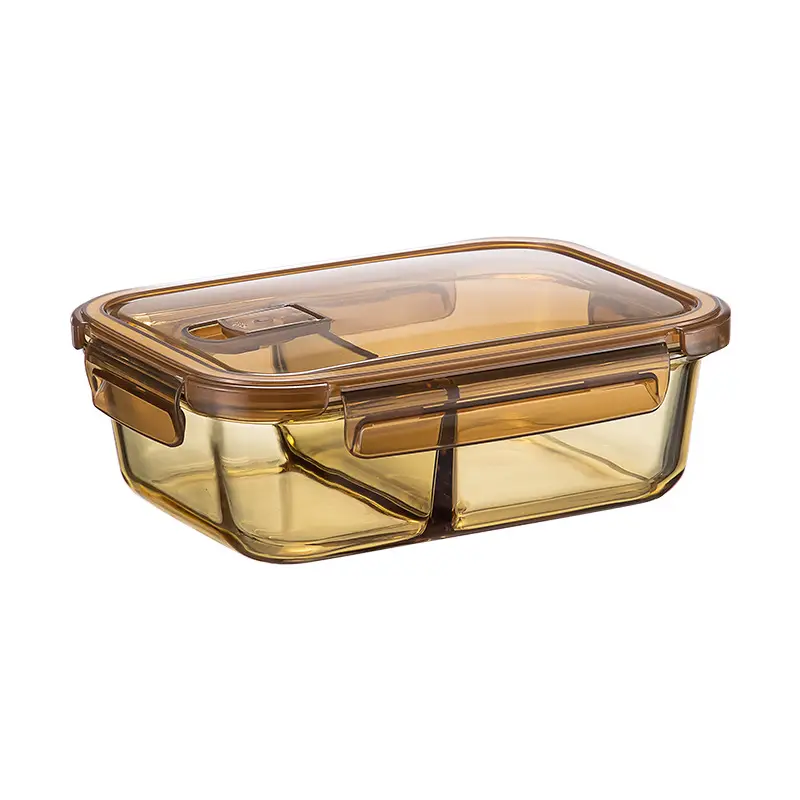
Borosilicate glass is made with boron trioxide added to the glass batch. That single change gives it far better resistance to sudden temperature change than ordinary glass. In food containers it is the material behind “oven-to-freezer” claims.
Soda-lime glass is ordinary glass — the kind used in most drinkware and jars. When heat-strengthened (tempered), it becomes much harder to break from impact, which is why it dominates budget glassware. But tempering does not give it the thermal shock resistance of borosilicate.
Plastic (PP / Tritan / melamine) covers a wide family. Food-grade PP is the workhorse of takeaway and budget meal prep; Tritan positions as the premium BPA-free option. All plastics share the same ceiling: they cannot go into a conventional oven, and they stain and retain odor faster than glass.
Head-to-head comparison
| Factor | Borosilicate glass | Soda-lime (tempered) glass | Plastic (PP / Tritan) |
|---|---|---|---|
| Sudden temperature change | Excellent — tolerates a sudden differential of around 120°C (3.3 borosilicate) | Moderate — tempering helps impact, not thermal shock | Poor — warps or deforms with high heat |
| Typical temperature range | -20°C to 400°C | Varies by grade — check the supplier’s rating before promising oven use | -20°C to 120°C for food-grade PP (grade-dependent) |
| Oven use | Yes (glass body) | Risky — check supplier guidance before promising it | No — conventional oven is off limits |
| Freezer use | Yes | Yes, with care on reheating | Yes (PP grades vary) |
| Microwave use | Yes (glass body; check lid separately) | Yes (glass body; check lid separately) | Depends on grade — “microwave safe” varies widely |
| Clarity after long use | Stays clear — a key retail shelf advantage | Good, dulls slightly faster | Clouds and scratches visibly over time |
| Stain and odor retention | Minimal | Minimal | Noticeable with tomato, curry, oils |
| Weight and freight | Heaviest — plan carton and container loading carefully | Heavy | Lightest — cheapest to ship per unit |
| Breakage in transit | Manageable with proper export carton design | Lower impact-breakage thanks to tempering | Near zero |
| Typical cost tier | Premium | Mid | Budget |
| Best-fit program | Retail, branded, oven-to-table meal prep | High-volume food storage, price-sensitive retail | Takeaway, canteen, entry-price meal prep |
The five differences that actually drive the buying decision
1. Thermal shock is the real divider between the two glasses
Buyers often assume “tempered” means “handles heat.” It does not. Tempering improves impact strength; it does little for a container moved straight from freezer to hot oven. For reference, 3.3 borosilicate typically tolerates a sudden temperature differential of around 120°C — enough for freezer-to-fridge or room-temperature-to-oven moves, but not a straight jump from a -18°C freezer into a 200°C oven (a 218°C shock). The -20°C to 400°C figure is the material’s working range, not its thermal-shock limit. If your product page or packaging promises oven-to-freezer use, the body needs to be borosilicate — this is the single most common material mistake we see in new buyers’ specs.
2. The lid decides more than buyers expect
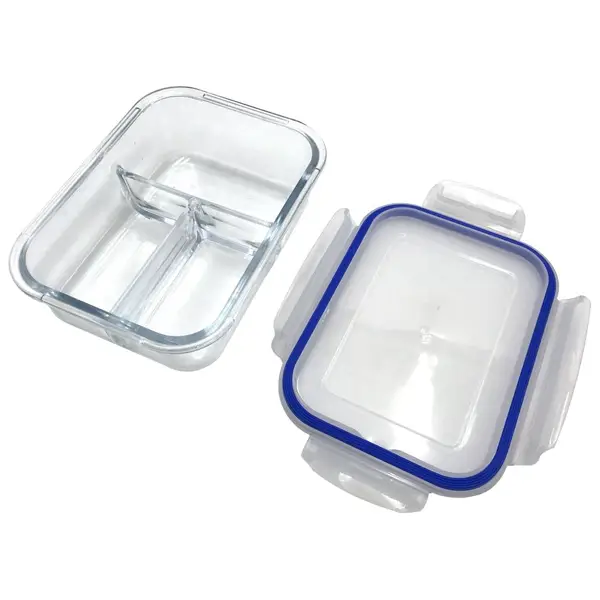
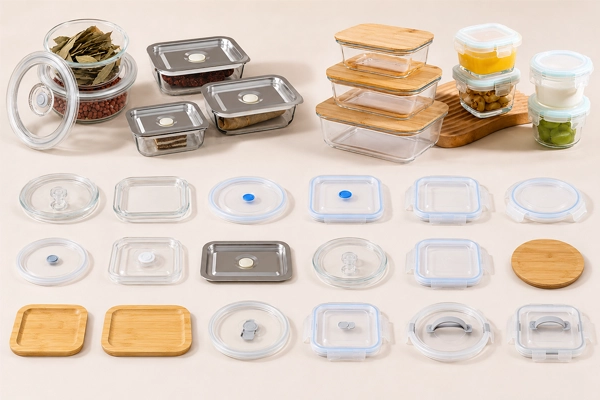
A borosilicate body with the wrong lid is still a bad product. PP snap lids, silicone-seal locking lids, vented lids for microwave reheating, bamboo lids for dry storage — each suits a different use case. When you request a quote, tell us the reheating scenario first; the lid recommendation follows from it. Our borosilicate lunch box range pairs each body with the lid system its use case needs.
3. Clarity is a retail asset, not a cosmetic detail
On a supermarket shelf, the container that still looks new after 200 uses wins the repeat purchase. Borosilicate holds clarity longest; plastic clouds fastest. For private-label programs where the consumer associates the container with your brand, this alone often justifies the step up from plastic.
4. Weight cuts both ways
Glass costs more to ship — there is no way around it. The offset is perceived value and repeat purchase rate. When we plan container loading for buyers, mixed-SKU loads (several sizes or lid options in one container) spread the freight per unit and make glass programs viable at retail price points. See our food storage container programs for how mixed loads are structured.
5. “Microwave safe” needs an asterisk on every material
The glass body is rarely the problem — the lid is. Vented PP lids handle microwave reheating; airtight silicone-seal lids may need venting or removal. Whatever the body material, confirm the lid’s heat rating separately before printing “microwave safe” on a retail box.
What we see from the factory floor
Three patterns repeat across the inquiries we quote:
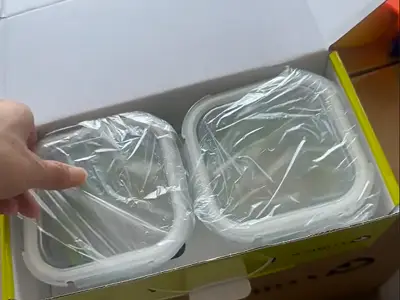
First, breakage complaints are almost always a packaging problem, not a material problem. Borosilicate survives export fine in a properly designed master carton with dividers; it breaks when a buyer squeezes retail color boxes into a thin outer carton to save freight. Tell us your target landed cost and we will design the carton around it — do not design the carton around the FOB price alone.
Second, buyers over-specify the body and under-specify the seal. The most returned “defective” containers we hear about are not cracked bodies — they are lids that lost airtightness after months of dishwasher cycles. If your program targets daily meal prep use, put the lid’s seal design and material on the spec sheet next to the body’s.
Third, the plastic-to-glass switch usually starts with one SKU. Retailers rarely convert a whole plastic line at once. The typical path: one borosilicate hero SKU (often a divided lunch box or a 3-piece set), proven at shelf, then the range expands. Our meal prep container line is built for exactly this kind of staged rollout, with mixed-SKU containers from the first order.
Which material for which market
North America and Western Europe: plastic pushback is strongest here — retail buyers increasingly ask for glass, and “oven-to-freezer” on the box is a conversion driver. Borosilicate leads; soda-lime tempered covers the value tier.
Middle East and Southeast Asia: price sensitivity is higher and reheating habits vary. Soda-lime tempered glass and PP both move in volume; borosilicate grows in the branded and gifting segments.
Private label vs. open stock: private-label programs justify borosilicate more easily because the container carries brand equity. Open-stock, price-driven wholesale leans soda-lime or plastic.
Cost positioning without the guesswork
We do not publish prices — too much depends on size, lid, packaging, and order structure. What we can say as a rule of thumb: for the same capacity and lid type, expect borosilicate to sit in the premium tier, tempered soda-lime in the middle, and PP at the budget end. The gap narrows at container-load quantities, especially with mixed-SKU loading. Send your item list and target market; we will return a loading plan with the per-unit freight math so you can compare tiers on landed cost, not FOB.
Buying borosilicate lunch boxes for a retail program?
Browse the wholesale range — divided, bento, and snap-lid options with retail packaging and mixed-SKU container loads.
For bakeware-specific programs (baking dishes, pie plates, casserole sets), see our borosilicate bakeware wholesale page.
FAQ
Can borosilicate glass lunch boxes go in the oven?
Yes — the glass body is rated for -20°C to 400°C. A direct freezer-to-oven jump can exceed the ~120°C thermal-shock limit, so let frozen containers temper before high-heat use. Always confirm the lid separately: most plastic lids must be removed before oven heating.
Is borosilicate glass better than tempered soda-lime glass for food containers?
For heat use, yes — borosilicate resists sudden temperature change far better. For pure impact resistance at room temperature, tempered soda-lime holds its own and costs less. Choose by your customers’ actual use: oven-to-freezer routines favor borosilicate.
Does glass stain like plastic?
Far less. Tomato, curry, and oils — the classic plastic stainers — wash off glass without the lingering color or odor. This is one of the main reasons meal prep users switch from plastic to glass.
Why do glass containers sometimes break in shipping?
Almost always inadequate export packaging, not the material. A proper master carton with dividers and correct stacking keeps breakage within normal commercial tolerance. This is a packaging design task — raise it before you fixate on FOB price.
Can I mix different sizes or lid types in one container load?
Yes. Mixed-SKU container loads are our standard way of working — several sizes, lid options, or packaging variants consolidated into one 20GP/40HQ. It is how most buyers make a glass program work at retail price points.
What is the MOQ for borosilicate lunch boxes?
Our MOQ is one 20GP container, single or mixed SKU. Send your item list and we will return a loading plan with quantities per SKU.
Next step
Keep reading:
Tell us three things — your target market, the reheating scenario (oven, microwave, or neither), and whether the program is private label or open stock — and we will recommend the material, lid system, and packaging structure before quoting.
Free hook — free material-selection consultation: send your item list and target market, and get a material + lid + packaging recommendation with a container loading plan, before you commit to anything.